How to Tell.if Baby Has a Fever Warm Hands
Although parents often worry about how high the temperature is, the height of the fever does not necessarily signal how serious the cause is. Some pocket-size illnesses cause a loftier fever, and some serious illnesses crusade simply a mild fever. Other symptoms (such every bit difficulty animate, confusion, and not drinking) indicate the severity of affliction much better than the temperature does. Still, a temperature over 106° F (virtually 41° C), although quite rare, can itself exist dangerous.
Fever can be useful in helping the body fight infection. Some experts remember that reducing fever can prolong some disorders or possibly interfere with the allowed system'south response to infection. Thus, although a fever is uncomfortable, it does not always require handling in otherwise good for you children. Withal, in children with a lung, middle, or brain disorder, fever may cause problems because information technology increases demands on the body (for example, by increasing the heart rate). So lowering the temperature in such children is of import.
Fever occurs in response to infection, injury, or inflammation and has many causes. Likely causes of fever depend on whether it has lasted 14 days or less (acute) or more than 14 days (chronic), as well as on the age of the child. Fevers are usually acute.
The most common causes of acute fever are
-
Respiratory infections due to a virus, such as colds or flu
Less common causes of acute fevers include side effects of vaccinations and of certain drugs, bacterial infections of the skin (cellulitis Cellulitis Cellulitis is a spreading bacterial infection of the skin and the tissues immediately beneath the pare. This infection is nigh often caused by streptococci or staphylococci. Redness, hurting, and... read more 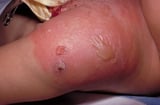 ) or joints (septic arthritis Infectious Arthritis Infectious arthritis is infection in the fluid and tissues of a joint normally caused by leaner just occasionally past viruses or fungi. Bacteria, viruses, or fungi may spread through the bloodstream... read more than ), encephalitis Encephalitis Encephalitis is inflammation of the encephalon that occurs when a virus directly infects the encephalon or when a virus, vaccine, or something else triggers inflammation. The spinal cord may besides exist involved... read more , and viral or bacterial infections of the brain (Kawasaki disease Kawasaki Disease Kawasaki disease causes inflammation of blood vessels throughout the torso. The cause of Kawasaki disease is unknown but may be associated with an infection. Children typically have fever, rash... read more
 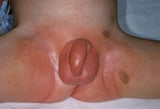 ), the tissues covering the brain (meningitis Meningitis in Children Bacterial meningitis is a serious infection of the layers of tissue covering the brain and spinal cord (meninges). Bacterial meningitis in older infants and children usually results from bacteria... read more than ), or both. Heatstroke Heatstroke Heatstroke is a life-threatening status that results in very high body temperature and malfunction of many organ systems. (See also Overview of Heat Disorders.) Heatstroke can develop after... read more causes a very loftier body temperature.
Chronic fever almost ordinarily results from
-
A prolonged viral affliction
-
Dorsum-to-dorsum viral illnesses, peculiarly in young children
Chronic fever can also be caused past many other infectious and noninfectious disorders.
Infectious causes of chronic fever include
-
Infections of the digestive tract acquired by bacteria or parasites
Noninfectious causes of chronic fever include
-
Juvenile idiopathic arthritis or other connective tissue disorders
Detecting a fever is not difficult, only determining its cause can be.
Certain symptoms are crusade for business organisation. They include
-
Any fever in infants less than ii months onetime
-
Lethargy or listlessness
-
Ill appearance
-
Difficulty animate
-
Bleeding in the skin, appearing as tiny reddish regal dots (petechiae) or splotches (purpura)
-
Continuous crying in an babe or toddler (inconsolability)
-
Headache, cervix stiffness, confusion, or a combination in an older child
Children with fever should be evaluated by a medico right away if they have whatever alarm signs or are less than 2 months former.
Children without warning signs who are between 3 months and 3 years of age should be seen past the dr. if the fever is 102.2° F (39° C) or higher, if in that location is no obvious upper respiratory infection (that is, children are sneezing and have a runny nose and nasal congestion), or if the fever has continued more than five days.
For children without alarm signs who are over 3 years of age, the need for and timing of a doctor's evaluation depend on the kid's symptoms. Children who have upper respiratory symptoms but otherwise announced well may not need further evaluation. Children over 3 years of historic period with fever lasting more than than 5 days should exist seen by the dr..
Equally doctors examine children, they await for warning signs (such as an ill appearance, lethargy, listlessness, and inconsolability), noting particularly how children respond to being examined—for example, whether children are listless and passive or extremely irritable.
Occasionally, the fever itself tin can crusade children to have some of the warning signs including lethargy, listlessness, and sick appearance. Doctors may give children fever-reducing drugs (such as ibuprofen) and reevaluate them in one case the fever is reduced. It is reassuring when lethargic children go active and playful in one case the fever is reduced. On the other hand, it is worrisome when sick-appearing children remain ill-appearing despite a normal temperature.

In infants between i month and 3 months old, blood tests, tests of urine (urinalysis Urinalysis and Urine Civilization Urinalysis, the testing of urine, may exist necessary in the evaluation of kidney and urinary tract disorders and tin also aid evaluate bodywide disorders such every bit diabetes or liver problems. A... read more 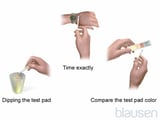 ), and cultures of urine are done. The need for hospitalization, a chest x-ray, and a spinal tap depends on results of the examination and blood and urine tests, as well equally how ill or well infants appear and whether a follow-up examination tin can be done. Testing in infants nether 3 months old is done to look for bacteremia, urinary tract infections, and meningitis. Testing is necessary because the source of fever is difficult to determine in infants and considering their young immune organisation puts them at high risk of serious infection.
If children age 3 months to 3 years wait well and tin can be watched closely, tests may not be needed. If symptoms suggest a specific infection, doctors exercise the appropriate tests. If children have no symptoms suggesting a specific disorder simply wait ill or have a temperature of 102.two° F (39° C) or higher, blood and urine tests are usually done. The need for hospitalization depends on how well or sick children look and whether a follow-upward examination can be done in a timely style.
In children over iii years of age, tests are typically not done unless children have specific symptoms suggesting a serious disorder.
If the fever results from a disorder, that disorder is treated. Other fever treatment is focused on making children experience better.
Ways to help children with a fever feel better without using drugs include
-
Putting cool, wet cloths (compresses) on their brow, wrists, and calves
-
Placing children in a warm bath (but slightly cooler than the temperature of the child)
Because shivering may actually raise the child's temperature, methods that may cause shivering, such as undressing and cold baths, should not be used.
Fever in an otherwise healthy kid does non necessarily require treatment. However, drugs called antipyretic drugs may make children feel better by lowering the temperature. These drugs do not accept any effect on an infection or other disorder causing the fever. However, if children have a heart, lung, brain, or nervus disorder or a history of seizures triggered by fever, using these drugs is important because they reduce the actress stress put on the body by fever.
Typically, the following drugs are used:
-
Acetaminophen, given past oral fissure or by suppository
-
Ibuprofen, given past mouth
Acetaminophen tends to exist preferred. Ibuprofen, if used for a long time, can irritate the stomach'south lining. These drugs are available over the counter without a prescription. The recommended dosage is listed on the parcel or may be specified by the doctor. It is of import to give the correct dose at the correct interval. The drugs practise not work if too little drug is given or it is not given often enough. And although these drugs are relatively safe, giving besides much of the drug or giving information technology too often tin cause an overdose.
Rarely, acetaminophen or ibuprofen is given to preclude a fever, as when infants have been vaccinated.
Aspirin is no longer used for lowering fever in children because information technology can interact with certain viral infections (such as influenza Influenza (Influenza) Flu (influenza) is a viral infection of the lungs and airways with one of the influenza viruses. Information technology causes a fever, runny nose, sore throat, coughing, headache, muscle aches (myalgias), and a general... read more or chickenpox Chickenpox Chickenpox is a highly contagious viral infection with the varicella-zoster virus that causes a characteristic itchy rash, consisting of pocket-sized, raised, blistered, or crusted spots. Chickenpox... read more 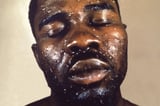 ) and crusade a serious disorder called Reye syndrome Reye Syndrome Reye syndrome is a very rare merely life-threatening disorder that causes inflammation and swelling of the brain and impairment and loss of function of the liver. The crusade of Reye syndrome is... read more than .
-
Usually, fever is caused by a viral infection.
-
The likely causes of fever and need for testing depend on the age of the child.
-
Infants nether two months of age with a temperature of 100.4° F or higher demand to be evaluated by a doc.
-
Children age 3 months to 3 years with fever who accept no symptoms suggesting a specific disorder just wait ill or accept a temperature of 102.2° F (39° C) or college need to exist evaluated by a doctor.
-
Teething does non crusade significant fever.
-
Drugs that lower fever may make children experience amend but do not affect the disorder causing the fever.
Source: https://www.msdmanuals.com/home/children-s-health-issues/symptoms-in-infants-and-children/fever-in-infants-and-children
0 Response to "How to Tell.if Baby Has a Fever Warm Hands"
Post a Comment