Nikkor Dx 55300mm F4556g Ed Afs Vr Lens Reviews
For the opportunity Nikon DX AF-S NIKKOR 55-300mm i Lens: iv.v-5.6G ED VR SWM HRI many cheers to Alexander, also every bit many thanks to the store www.fotika.com.ua (where in 2018 I took the lens again to make certain some of its nuances).
Nikon 55-300mm F / 4.5-v.6 VR
In short
Nikon 55-300mm F / 4.5-5.six VR - Telephoto Lens with Image Stabilizer for Nikon DX cameras. First of all, the Nikon 55-300mm F / 4.5-5.6 VR is interesting for 5.5x zoom and the ability to employ 300mm focal length. Considering ingather factor Nikon DX cameras for which this lens was designed, its EGF will be as much as 450 mm. It is easy to 'reach' distant objects with this lens. With Nikon 55-300mm F / iv.five-5.vi VR, you can shoot people from afar, wildlife, and apply it equally a portrait lens. Nikon 55-300mm f / 4.five-5.vi VR has a minor aperture F / 4.5-5.6, but avoid grease when handheld photography stabilization system helps Nikon VR second generation. I achieved what I could have off without grease, using 300 mm focal length and shutter speed of the guild of i/80 2d. I was satisfied with the work of VR.
Unfortunately, the focusing speed of the Nikon 55-300mm F / iv.five-5.6 VR is at a very low level, and the lens also has a very inconvenient transmission focus.
Nikon 55-300mm F / 4.5-5.6 VR
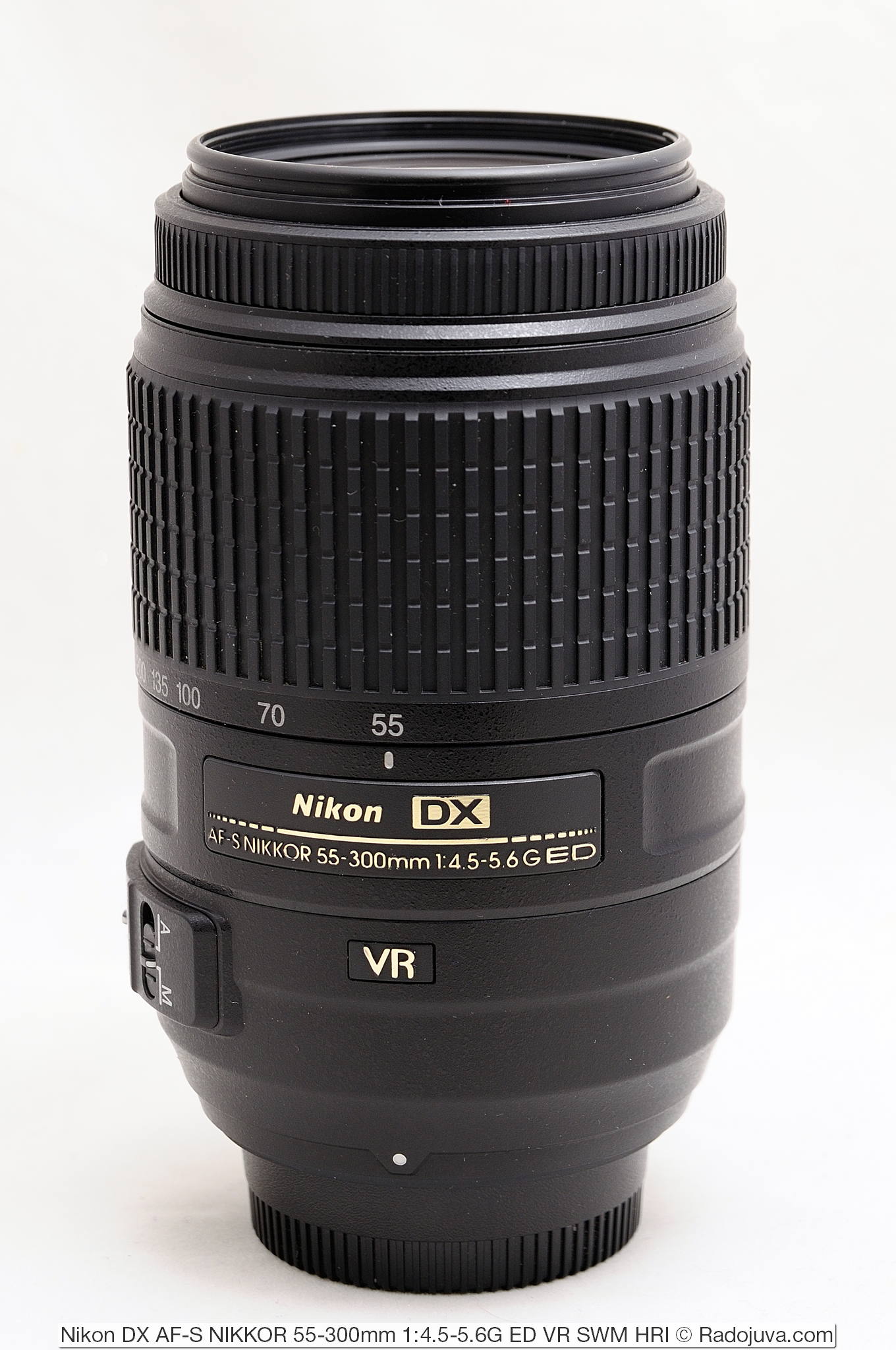
Chief technical characteristics of Nikon DX AF-S NIKKOR 55-300mm 1: 4.5-five.6G ED VR SWM HRI:
| Review Instance Name | Nikon DX AF-S NIKKOR 55-300mm 1: 4.v-5.6G ED VR SWM HRI 3172853 |
| Basic backdrop |
|
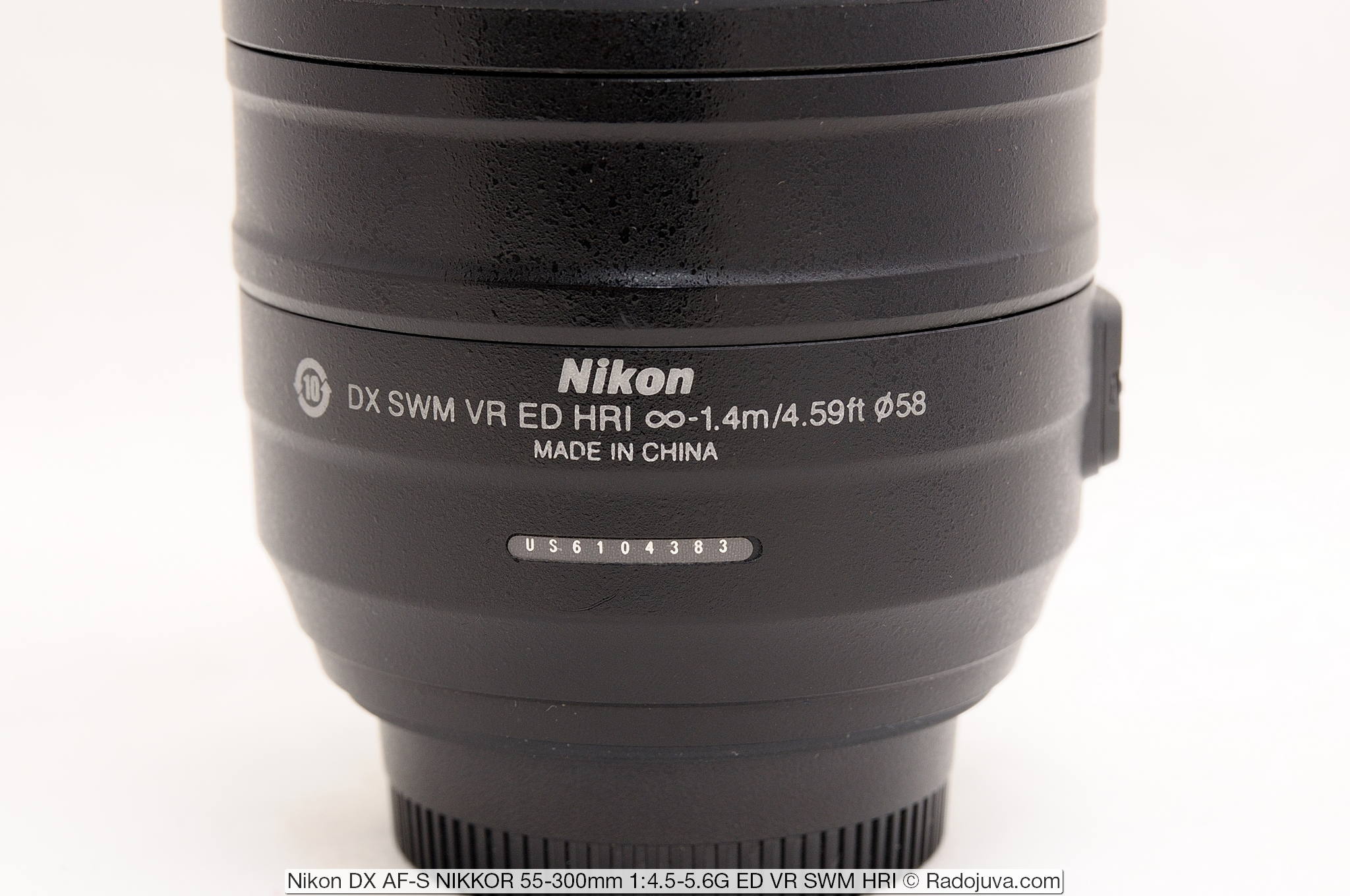
| Front Filter Diameter | 58 mm, plastic thread for filters |
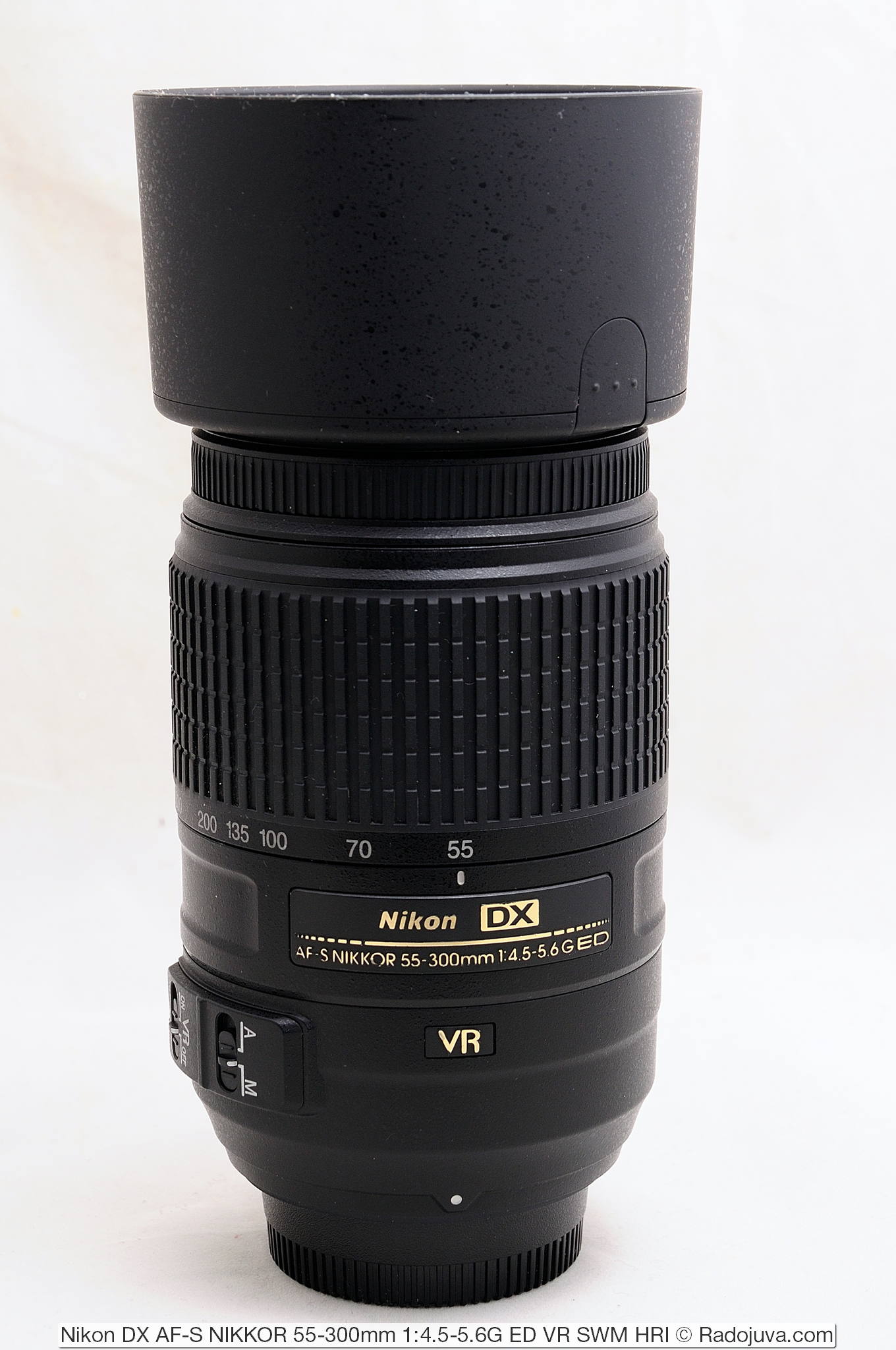
| Focal length | 55-300 mm, EGF for Nikon DX cameras is 82.5-450 mm |
| Zoom ratio | 5.45 x |
| Designed by | for digital cameras Nikon DX |
| Number of aperture blades | 9 rounded petals |
| Tags | focal lengths for 55, 70, 85, 105, 135, 200, 300 mm, bayonet mount mark and hood mounts |
| Diaphragm |
The lens is deprived of the aperture command ring, control is via the photographic camera menu (G - lens blazon) |
| MDF (Minimum Focus Distance) | 1.4 1000 over the entire range of focal lengths, maximum magnification ratio 1: 3.6 |
| Stabilizer features | Upwards to 3 steps excerpts 300 mm focal length by CIPE standards (indicated on the official website), up to 4 steps by Nikon standards (indicated in the instructions) |
| The weight | 530 chiliad |
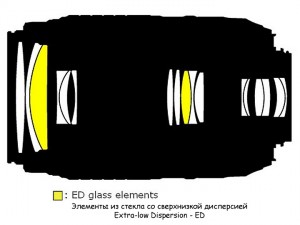
| Optical design | 17 elements in 11 groups, including 2 low dispersion element (shown in yellowish on the optical diagram). The presence of such elements is indicated on the body by the abridgement 'ED'. Too every bit i HRI element (high refractive index), an element with a loftier refractive index (location on the optical scheme is not indicated) Prototype of optical circuit clickable |
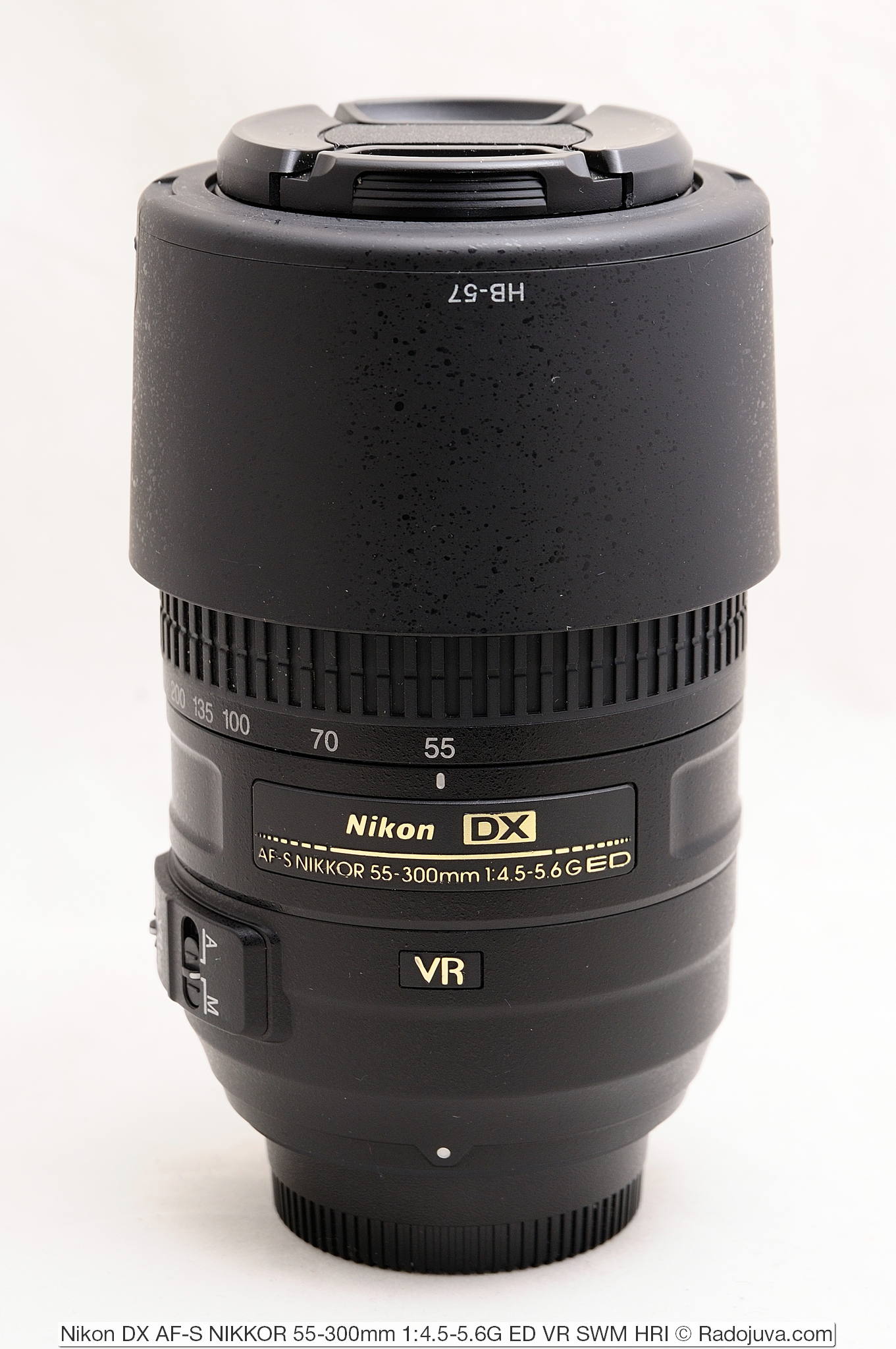
| Lens hood | Nikon HB-57, bayonet blazon, plastic, comes standard. |
| Transportation | With a soft cover CL-1020 |
| Manufacturer country | Communist china (PRC), inscription on the lens: "Fabricated IN China" |
| Period | From August 2010 to the present. In 2016 augmented past a lens Nikon DX AF-P Nikkor 70-300mm one: 4.5-6.3G ED VR |
| Instructions | View–> |
| 3D view | View–> |
| Electric current prices in modernistic online stores |
|
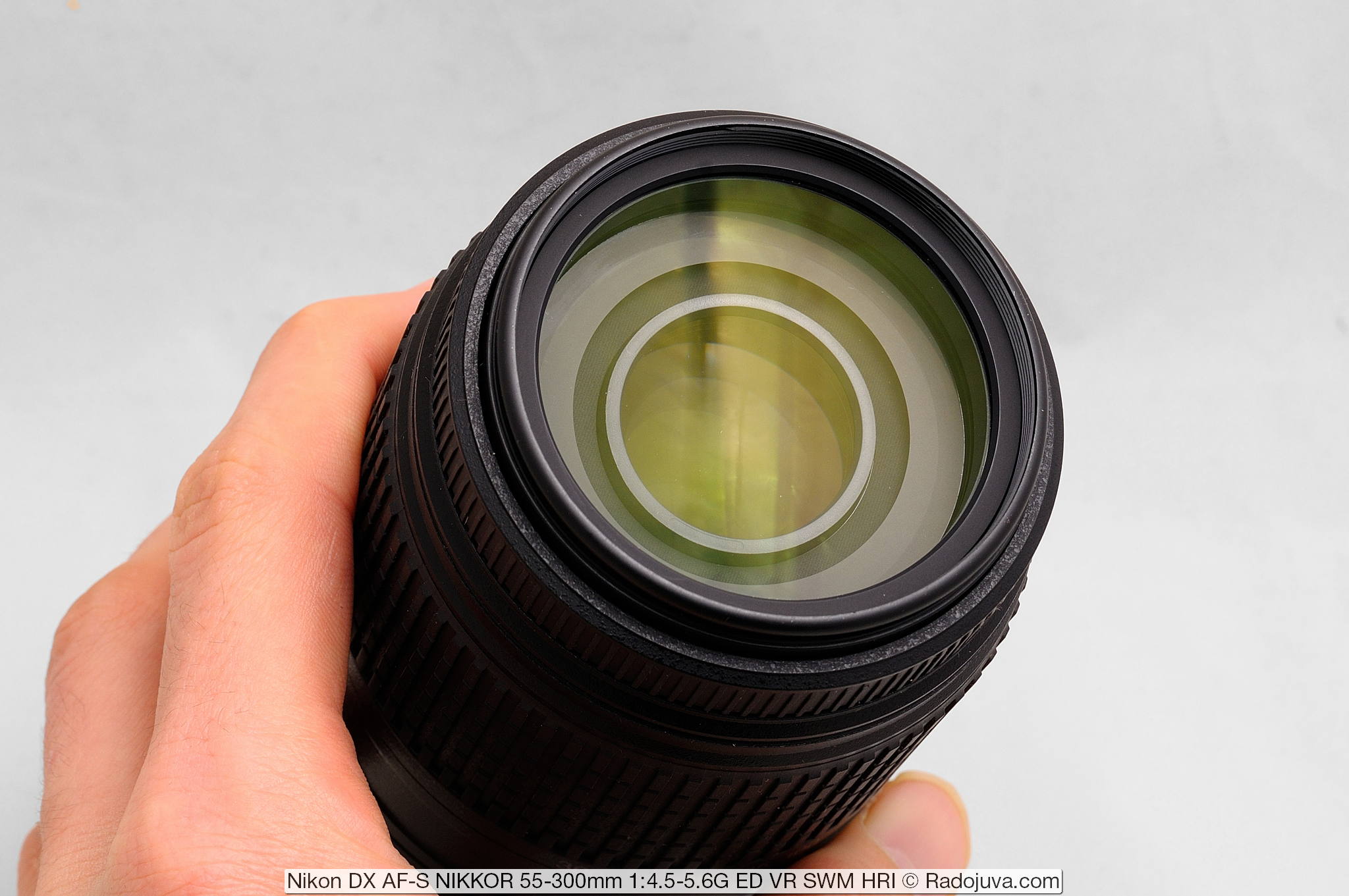
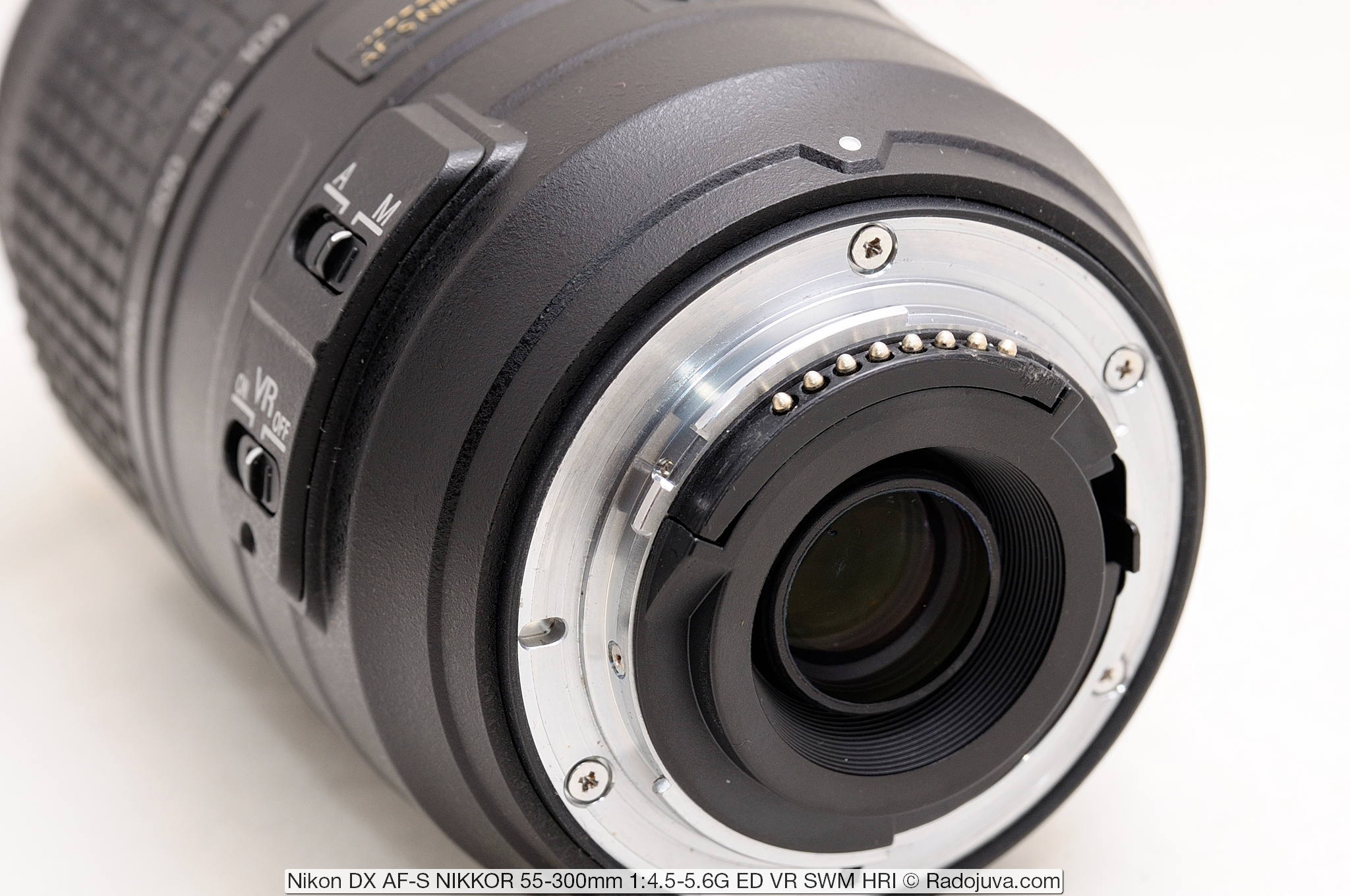
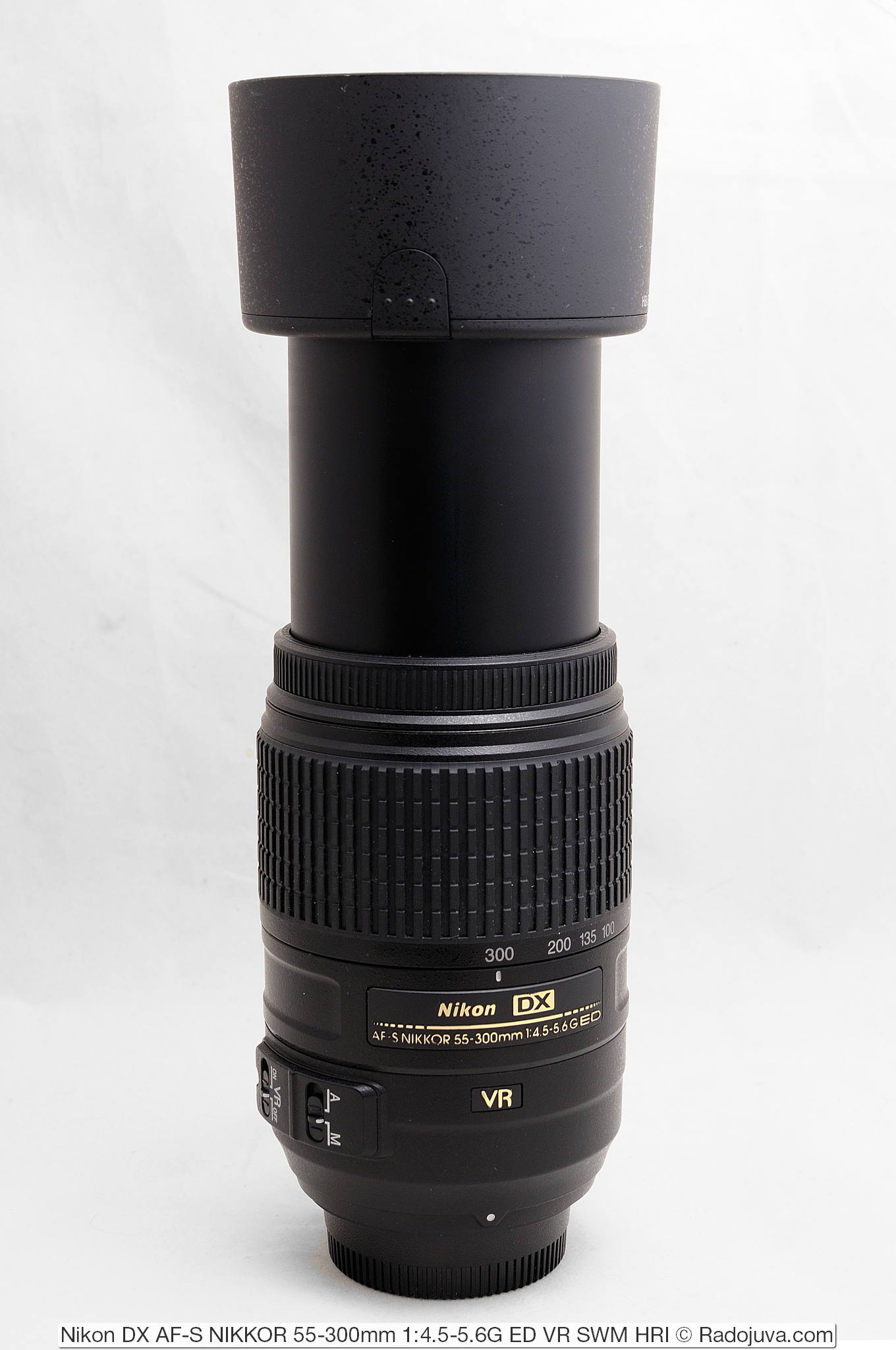
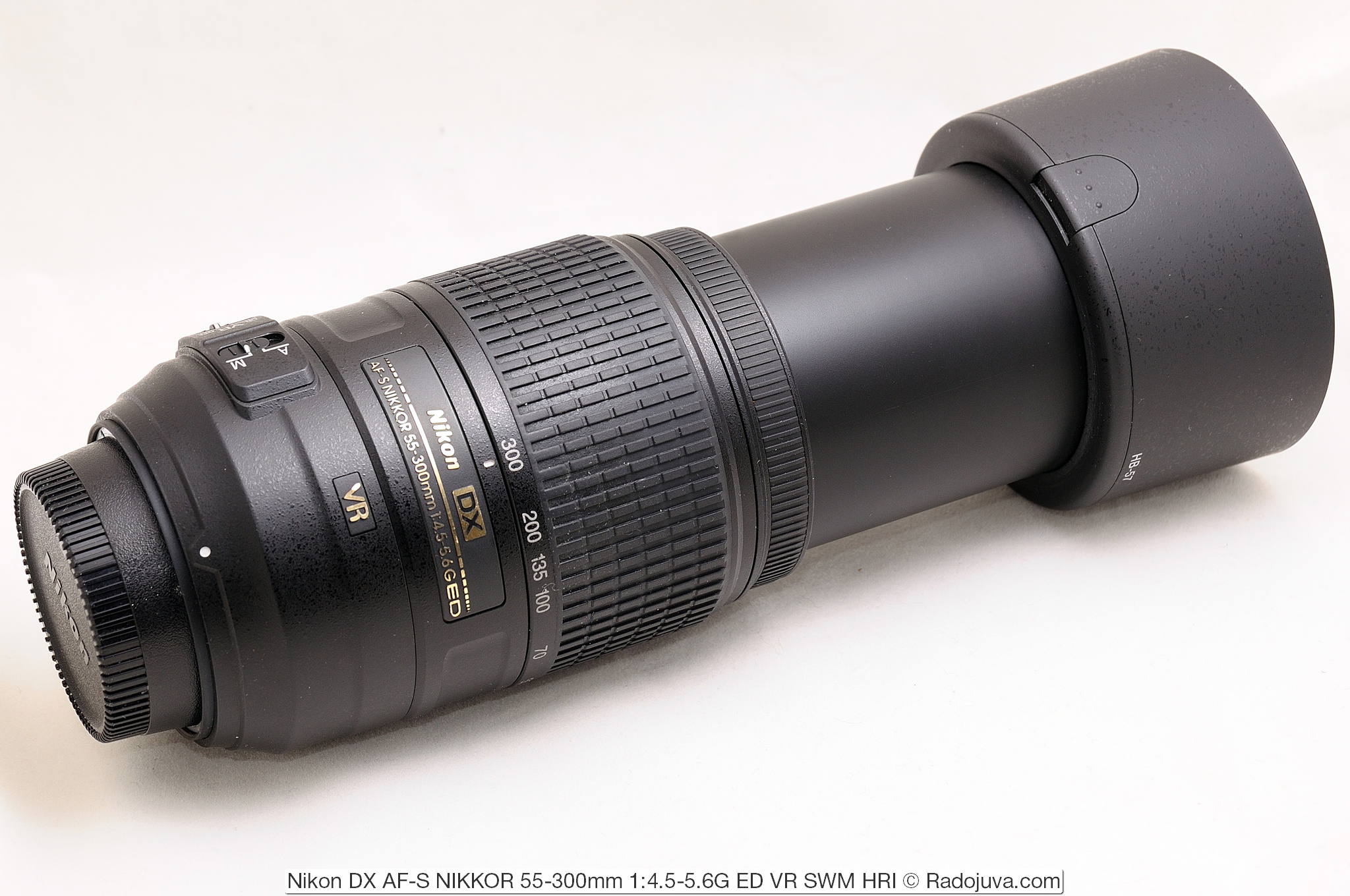
The set up includes a plastic hood HB-57. The hood is attached to the lens with 2 clips. The hood can be worn backwards and carried with you at all times, while access to the zoom ring is partially blocked. The diameter of the front filter, as for a telephoto, is modest - 58 mm. The diaphragm has ix rounded blades.
Nikon 55-300mm F / 4.5-v.half-dozen VR
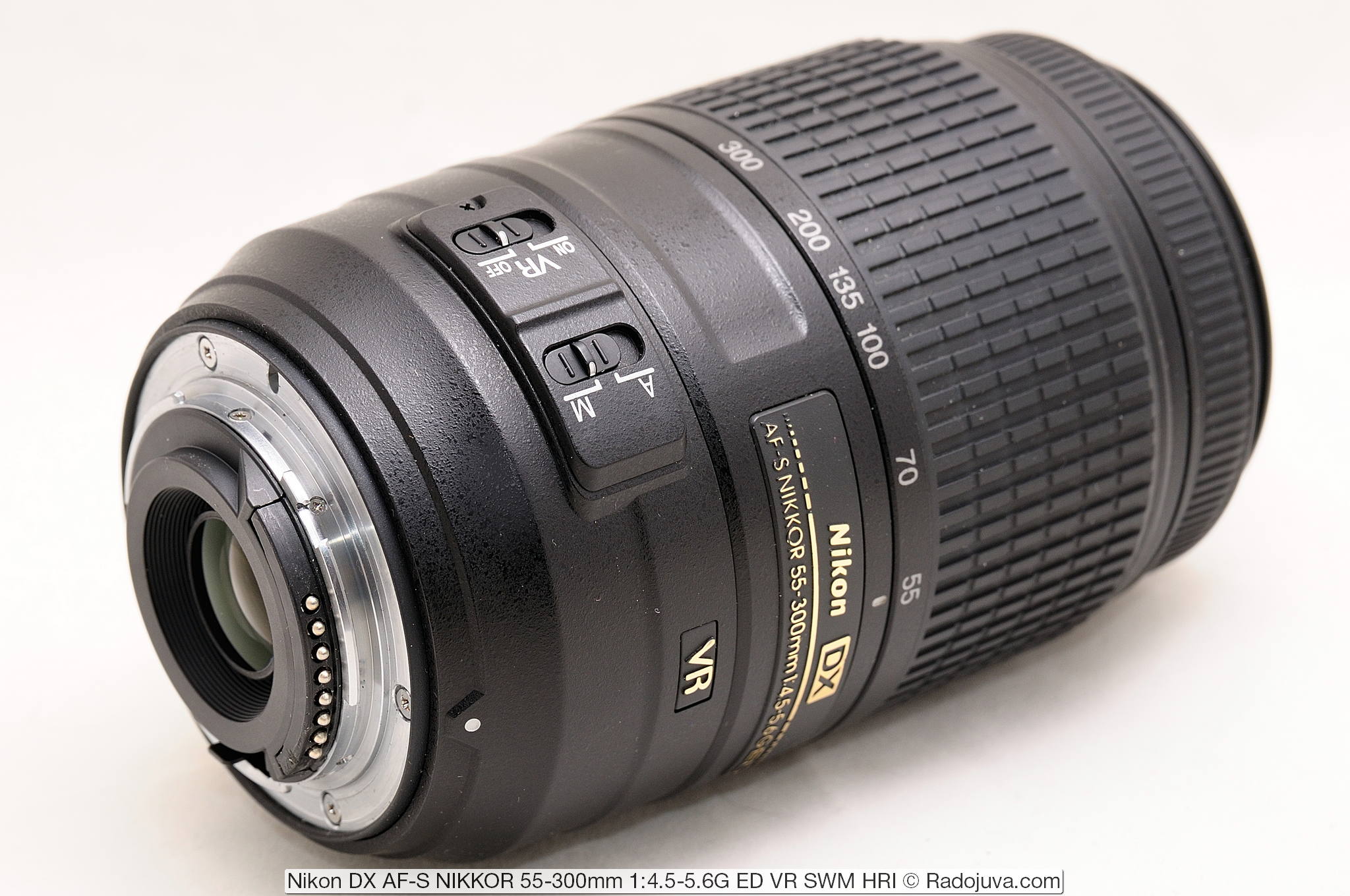
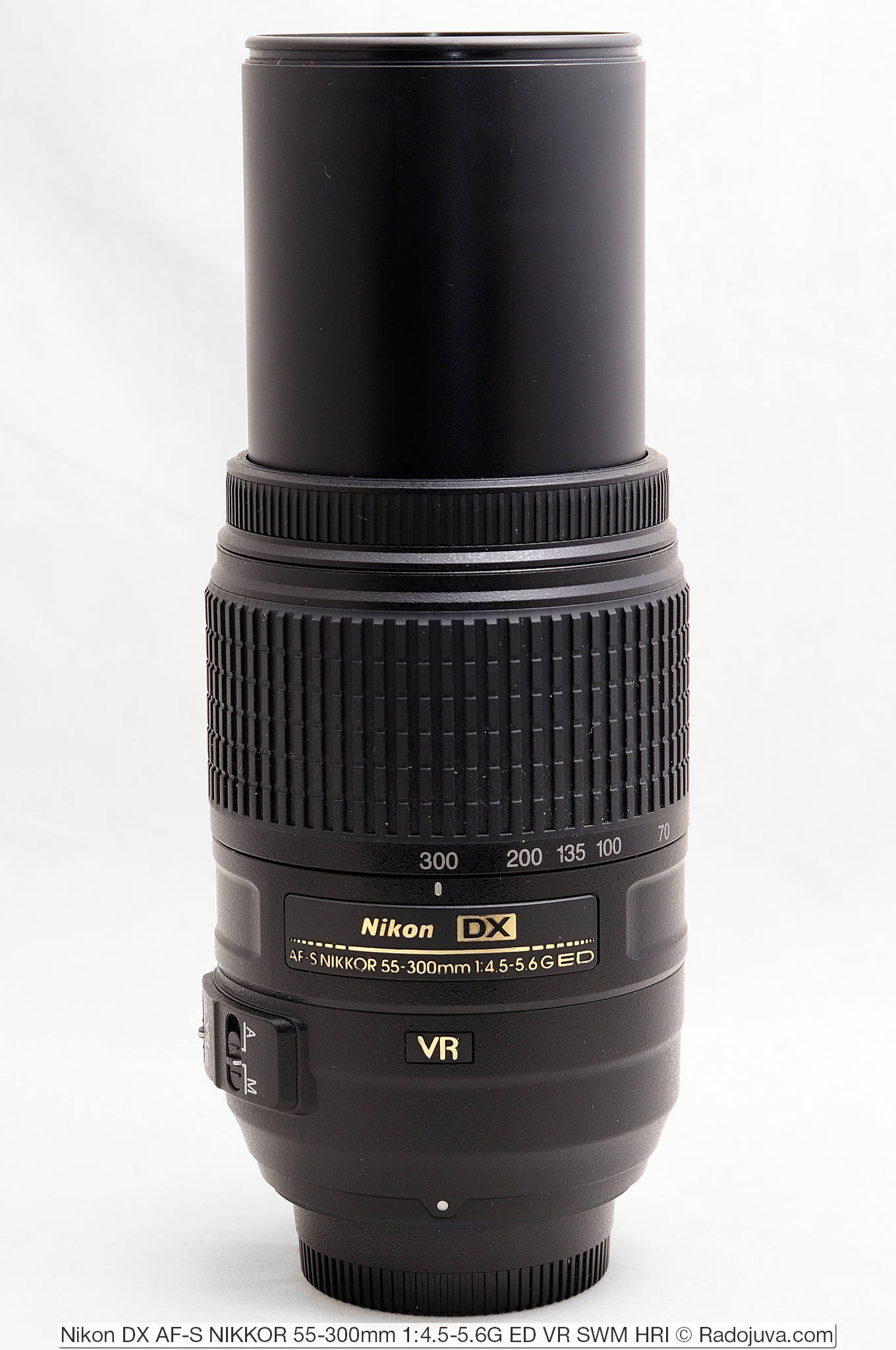
It is assembled well, with a metal bayonet mount, the Nikon 55-300mm F / 4.5-5.6 VR weighs a little more than 500 grams. When zooming, the rear lens of the lens moves, driving air through the insides of the photographic camera.
Nikon 55-300mm F / 4.v-five.vi VR
Focusing
Nikon 55-300mm F / 4.5-five.6 VR focuses thank you to 'SWM'-motor (Silent Wbird Yardotor - quiet moving ridge motor) and refers to the lens'AF-S'blazon (with congenital-in motor focusing). Nikon 55-300mm F / four.five-five.half-dozen VR uses compact 'swm' motor.
Important: this lens volition automatically focus on all Nikon DSLR cameras.
Despite claims that the focus motor is silent, noise is present during bodily functioning. This noise will affect the audio quality during motion-picture show shooting using the microphone built into the photographic camera. During automatic focusing, you can sometimes hear and feel how unpleasantly the focusing mechanisms rub (including the focus ring).
Auto focus speed is highly dependent on the selected focal length. Focusing speed at 55 mm focal length boring, with an increase in focal length, the focusing speed decreases significantly. At 300 mm focal length, the lens spends a lot of time focusing, and the focusing speed at this focal length value can be considered very very low. Focus speed is contained of camera orientation. Most likely this lens is the slowest in the entire line of Nikon DX lenses.
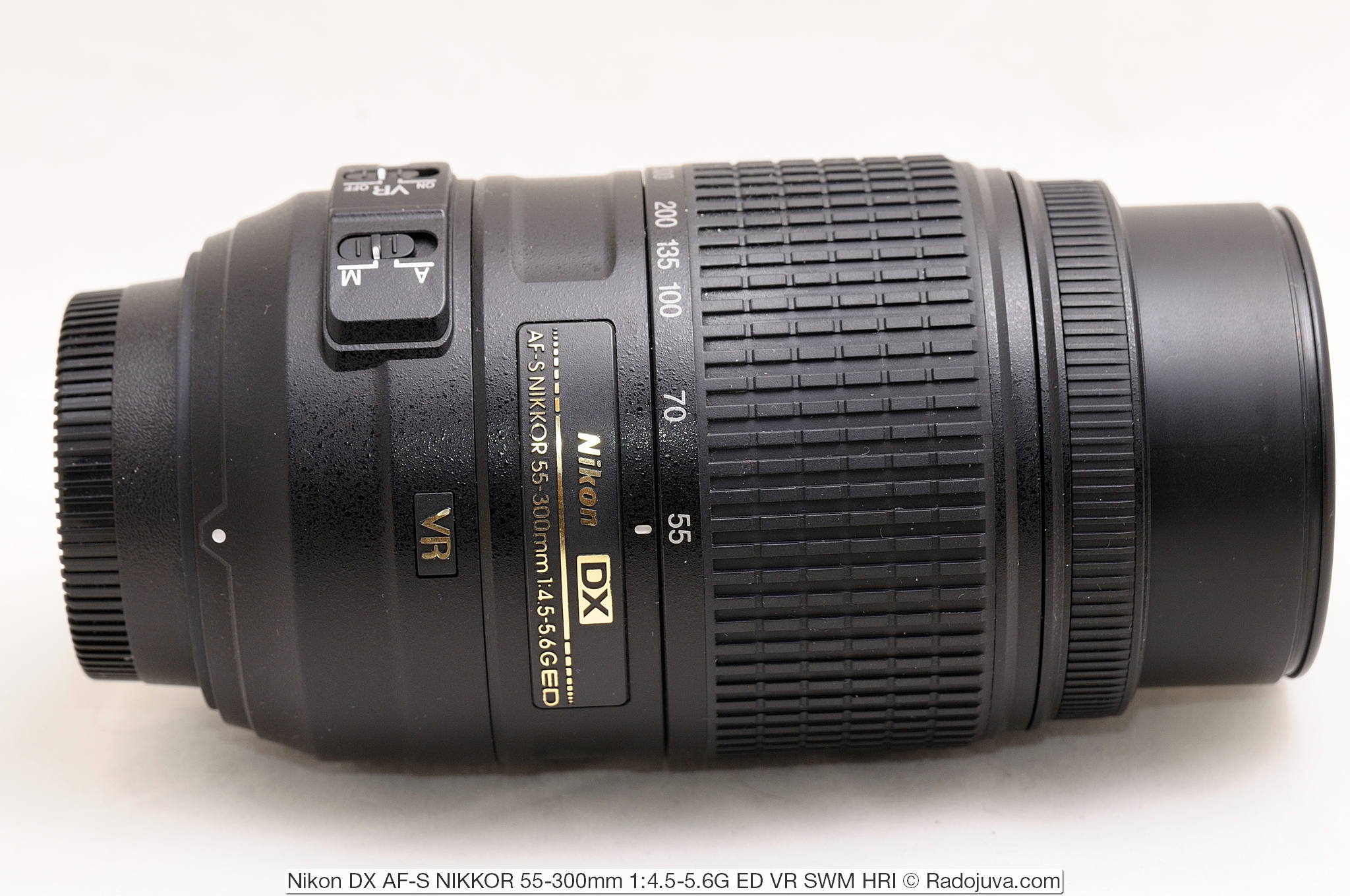
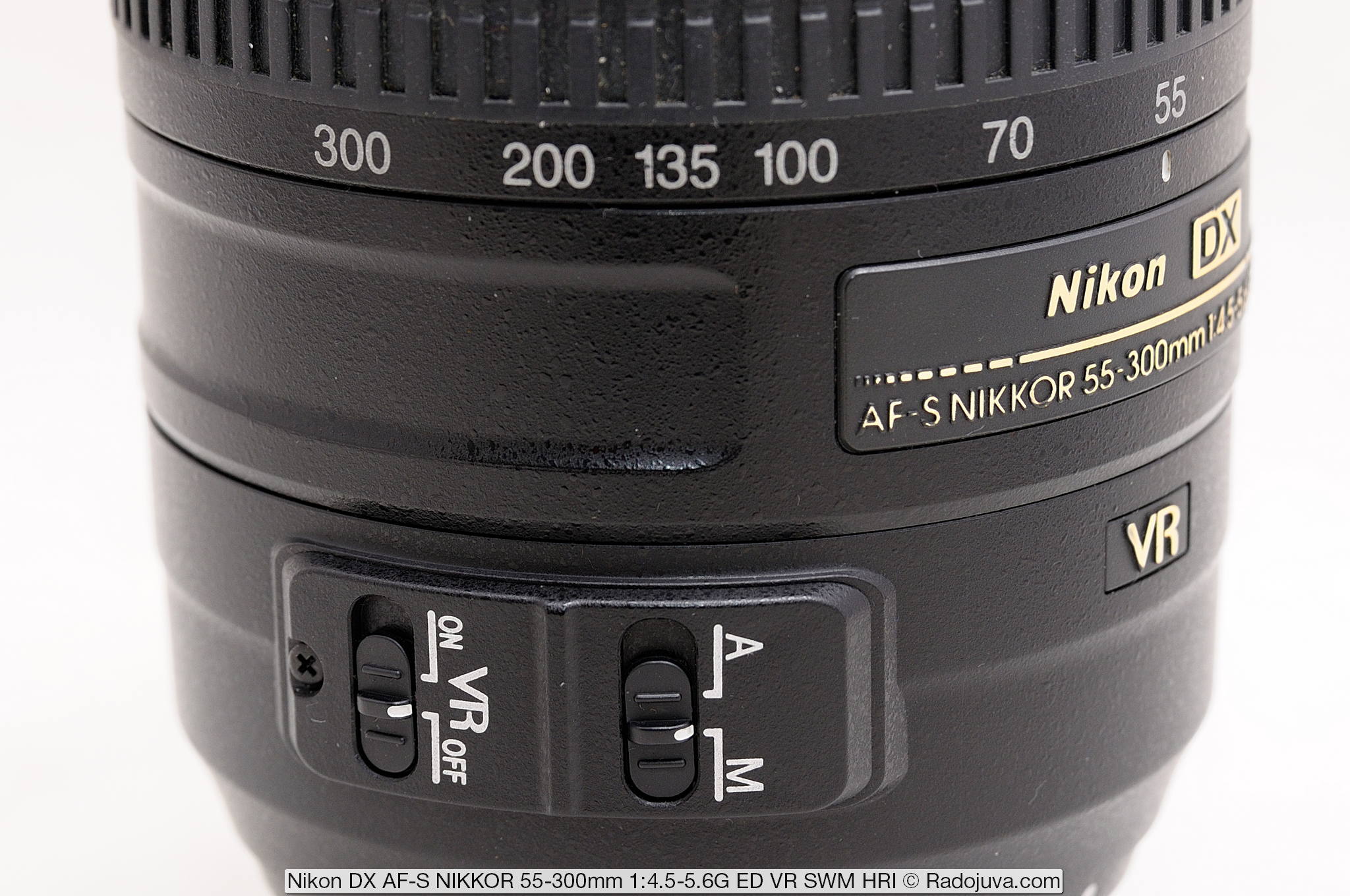
On the lens housing you can find focus switch 'A - M'. In position 'A', auto focus works, and in position 'M' - manual focus. During car focus, the focus ring rotates and cannot exist touched. To perform manual focusing, the lens must be switched to 'G' mode. The lens does not have a constantly manual focus control mode One thousand / A or A / m.
During focusing, the front end lens rotates, and the front of the torso frame (body) moves frontwards.
The focus ring rotates approximately 75 degrees. When the end positions are reached, the focusing ring stops. The band is narrow, but rubberized. Transmission focusing with this lens is hell. With manual focus focus ring jerks. You can forget about smooth focusing - in order to manually shift the focus ring, you have to exert considerable try, later on which the ring starts to movement and flies over the desired value.
When used on a camera Nikon D90 (with unpretentious Multi-CAM thou focusing system) the lens behaves well, rarely focuses incorrectly. I had no problems with focus accuracy and focus. On photographic camera Nikon D90 I checked the presence of the back and focus front at different focusing distances and different values of the focal length (infinity and MDF too). Pictures taken using the Live View mode (which does not suffer from back / front focus) were used as a mensurate. Focusing accuracy using the key cross-shaped phase sensor completely coincided with the Live View mode.
The minimum focusing distance is 140 cm (the altitude from the photographic camera's matrix / focal plane to the discipline). With such an MDF, the maximum magnification factor is achieved by 300 mm of the focal length and is 1: iii.6 (you tin can shoot a weak macro).
Nikon 55-300mm F / 4.five-5.six VR
Other focusing features:
- At that place is no depth of field scale, focusing distance and mark for working in the infrared spectrum. In that location is nada at all, except for the focal length marks.
- During tests focus shift (shift-focus) was non noticed.
- Present very strong 'Focus Breathing' effect (changes in viewing angle during focusing).
- Nikon 55-300mm F / four.5-v.6 VR has no special focus issues in Live View (tested on Nikon D90).
- When changing the focal length, focusing is almost not lost.
- The lens does not have a hard finish (difficult infinity mechanical end) which allows you to accurately and chop-chop focus the lens to infinity under any external temperature conditions.
- Unknown compatibility with teleconverters.
- During shooting at a depression temperature, near -5C, the auto focus with this lens began to neglect.
Nikon 55-300mm F / iv.5-5.6 VR
Sample Photos
Photos from Nikon 55-300mm F / 4.five-five.6 VR plough out expert, though the lens is a chip soft on a range of 200-300mm on open apertures, there is low-cal vignetting on open apertures. Distortion is about invisible. Sample photos taken on Nikon D80, on-camera JPEG without processing.
Nikon 55-300mm F / iv.5-5.6 VR
Personal impressions
The Nikon 55-300mm F / 4.v-5.6 VR is an ambiguous lens. On the one paw, it shows good prototype quality, and on the other hand, it shows a horribly implemented focusing system. If you have money to spare, I recommend a skillful and proven full frame lens. Nikon seventy-300 mm f / 4.5-five.6G IF-ED AF-S VR Nikkor. If in that location are no funds, then you lot can safely do with a simpler model Nikon 55-200 / four-five.6GII VRII.
I recommend this Nikon 55-300mm F / 4.five-5.half dozen VR only if it actually works in the range of 200-300 mm. Based on my experience, I want to add that the difference between 200 and 300 mm of focal length is not very felt in photographs, and 200 mm is quite enough for many photo tasks. Moreover, the EGF of a 200-ton will be 300 mm.
All in all, I consider the Nikon 55-300mm F / 4.5-5.6 VR an unsuccessful lens.
Nikon 55-300mm F / iv.5-5.6 VR
Lens prices in pop stores tin look at this link, or in the price block below:
Nikon 55-300mm F / 4.v-5.6 VR
Video review
Video review you tin have a await on my Youtube aqueduct or lower:
Comments on this post exercise not crave registration. Anyone tin get out a comment. A wide variety of photographic equipment tin be found on AliExpress, Amazon и B&H Photo.
Nikon 55-300mm F / 4.five-five.6 VR
All original Nikon DX telephoto lenses
- Nikon DX AF-South Nikkor 55-200mm 1:4-v.6G ED SWMarel 2005
- Nikon DX AF-S Nikkor 55-200mm 1:4-5.6G ED VR IF SWMMarch 2007
- Nikon DX AF-South Nikkor 55-200mm 1:iv-5.6GII ED VRIIJanuary 2015
- Nikon DX AF-S Nikkor 55-300mm 1:iv.5-five.6G ED VR SWM HRIAugust 2010
- Nikon DX AF-P Nikkor lxx-300mm 1:four.5-six.3G EDAugust 2016
- Nikon DX AF-P Nikkor 70-300mm 1:4.v-6.3G ED VRAugust 2016
A list of absolutely all lenses of the Nikon DX series, too as a lot of useful information on lenses and cameras Nikon volition observe hither.
Nikon 55-300mm F / four.5-five.6 VR
All 70-300 Class Total Frame Lenses with Stabilizer
Sigma
- Sigma DG OS lxx-300mm ane: four-5.6 (for Sigma SA, Sony A, Nikon F, Pentax M, Catechism EF / EF-S)
Tamron
- Tamron DI SP 70-300mm F / 4-5.half-dozen VC USD A005 (for Nikon F, Canon EF / EF-S, Sony A)
Catechism (EF, EF-Southward)
- Catechism Zoom Lens EF 75-300mm 1: 4-5.6 IS USM
- Catechism Zoom Lens EF 70-300mm i: 4-5.6 IS USM
- Canon Zoom Lens EF 70-300mm one: 4-five.6 IS Two USM (NanoUSM)
- Canon Zoom Lens EF 70-300mm 1: 4.5-5.six Exercise IS USM
- Catechism Zoom Lens EF lxx-300mm 1: iv-5.vi L IS USM
Nikon (F, FX)
- Nikon ED AF-S Nikkor lxx-300mm one: 4.5-five.6G VR IF SWM
- Nikon ED AF-P Nikkor lxx-300mm 1: 4.5-5.6E VR
Sony (E, FE)
- Sony Fe 4.5-5.6 / 70-300 Chiliad OSS
The names of the lenses are indicated according to the inscription on their body.
Nikon 55-300mm F / 4.5-5.6 VR
An accurate list of all Nikon DX Nikkor lenses
- 10.5 mm/ 2.8G AF Fisheye [gold ring]
- 35 mm/1.8G AF-S
- 40 mm/2.8G AF-S Microphone
- 85 mm/3.5G AF-S VR Microphone
- 10-20 mm/4.5-5.6G AF-PVR
- 10-24 mm/3.5-4.5G AF-South
- 12-24 mm/4G AF-S[gilded ring]
- 16-80 mm/ 2.viii-4IN AF-SVR [golden ring]
- 16-85 mm/iii.five-5.6G AF-SVR
- 17-55 mm/2.8G AF-S [golden band]
- 18-55 mm/3.v-five.6G AF-S [black / silver]
- 18-55 mm/3.five-five.6GII AF-S [black / argent]
- 18-55 mm/3.v-5.6G AF-SouthVR
- 18-55 mm/three.5-5.6GII AF-SVR
- 18-55 mm/three.5-v.6G AF-P
- 18-55 mm/3.5-5.6G AF-PVR
- eighteen-70 mm/3.5-4.5G AF-South
- 18-105 mm/3.five-5.6G AF-SouthVR [Thailand / China]
- 18-135 mm/3.5-5.6G AF-S
- eighteen-140 mm/iii.5-five.6G AF-SVR [Thailand / China]
- 18-200 mm/3.v-5.6G AF-SouthwardVR [Japan / China]
- xviii-200 mm/three.5-5.6GII AF-SVR
- eighteen-300 mm/3.five-5.6G VR
- 18-300 mm/iii.5-six.3GVR
- 55-200 mm/4-five.6G AF-S [black / silver, Japan / China]
- 55-200 mm/4-5.6G AF-SVR
- 55-200 mm/4-five.6GII EDVR
- 55-300 mm/4.5-5.6G AF-SVR
- seventy-300 mm/4.five-six.3GAF-P
- seventy-300 mm/4.v-6.3G AF-PVR
Results
Nikon DX AF-S NIKKOR 55-300mm ane: 4.v-five.6G ED VR SWM HRI is an ambiguous lens, a more advanced alternative for Nikon DX AF-S Nikkor 55-200mm 1: iv-5.6G ED VR IF SWM.
Advantages
- built-in image stabilizer, stabilizer works well
- special optical elements in the optical circuit (ED, HRI)
- relatively calorie-free weight, minor diameter of the front filter
- rear mount lens hood
- lack of self-extension of the trunk nether its own weight (maybe this begins only with fourth dimension)
- metal mount, rubberized focus and zoom rings
- protective O-ring near the mount for base grit and moisture protection
- skillful maximum magnification ratio for macro shooting, which is 1: 3.half dozen
- ultrasonic built-in focus motor
- 9 petals aperture, the lens creates adequately smooth blur discs
- lack of focus-shift during iris
- smooth and proportional aperture drib from 55 to 300 mm focal length
- good cost / quality ratio, especially when this lens comes in a double-kit
- expert optical functioning (low or moderate distortion, vignetting, chromatic aberrationgood sharpness)
The chief disadvantages
- during focusing, the front end lens and the thread under the filters rotate
- very low auto focus speed (this is the slowest lens in the entire line Nikon DX)
- used for focusing compact 'swm' motor, instead of the powerful and fast ring 'SWM' motor
- small stroke of the focus ring, very inconvenient transmission focus (the most inconvenient in the entire line Nikon DX)
- rotation of the focus ring during autofocus and, every bit a event, lack of the office of constant manual focus control
- problems focusing in the cold (possibly not all copies)
- while zooming and / or focusing, the body moves forward
- focusing falters while changing the focal length
- no focus distance scale, depth of field and tags for working in the infrared spectrum
- the lack of a switch for selecting stabilizer operating modes, which, for instance, is Nikon DX AF-South eighteen-200mm 1: 3.5-v.6GII VR
- rear lens motion while irresolute the focal length, minor effect of a vacuum cleaner / air pump
- very strong 'Focus Breathing' upshot. During focusing towards MDF, the viewing angle decreases
- resolution driblet in the range of 200-300 mm
Material prepared Arkady Shapoval... Look for me on Youtube | Facebook | Instagram | Twitter.
Source: https://radojuva.com/en/2013/07/nikon-55-300-vr-ed-dx-review/
0 Response to "Nikkor Dx 55300mm F4556g Ed Afs Vr Lens Reviews"
Post a Comment